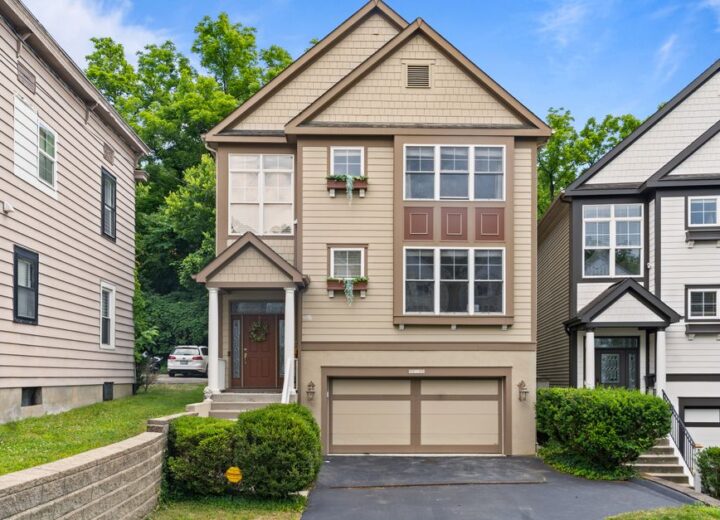
Selling an Inherited Concord Duplex With an Open Exemption
Selling an inherited Concord duplex while an exemption notice is still open puts you in a specific bind. The city’s ordinance exempts single-family homes, condos and ADUs, but not duplexes. So the way you answer the city now becomes the disclosure you hand the buyer, the document their lender demands, and the lever they use on price. It’s a chain of consequences that starts with a form you might not even have in front of you.
The estate’s executor or administrator often doesn’t know the duplex was ever registered, let alone that an exemption was claimed. Maybe the previous owner filed a notice years ago and never followed up. Maybe the city sent a letter that’s sitting in a stack of unopened mail. Either way, you’re selling a property where the rent-control status is unresolved, and that unresolved status travels with the deed.

Why the Open Exemption Is Harder Than It Looks
Most people assume an exemption notice is a one-time filing. It isn’t. Concord’s rent stabilization program requires ongoing compliance, and the city can ask for documentation at any time. When a duplex changes hands through inheritance, the city doesn’t automatically close the file. The open notice stays open until someone answers it.
Here’s what people get wrong: they think the exemption attaches to the owner. It doesn’t. It attaches to the property, and to the tenancy. If the inherited duplex has a tenant in place, the exemption status affects what rent can be charged, what increases are allowed, and what the buyer inherits. A buyer’s lender will not underwrite a loan on a duplex with an unresolved rent-control question. They’ll ask for the notice, the city’s response, and a clear statement of whether the unit is exempt or not.
The second mistake is treating the city’s inquiry as a nuisance. The city’s housing division sends a letter asking for proof of exemption. If you ignore it, the city may assume the unit is not exempt and apply the rent cap. That assumption becomes a public record. A buyer’s attorney will find it. Then the negotiation starts from a position where the duplex looks like a rent-controlled property with a below-market tenant. That’s a price cut, not a paperwork delay.
What the City Actually Wants From You
Concord’s ordinance carves out single-family homes, condos and ADUs. A duplex is not on that list unless it meets a specific owner-occupancy test or another narrow exemption. The city’s letter will ask you to confirm the current use and occupancy. You answer with documents: the deed showing inheritance, the lease or rental agreement, proof of owner occupancy if claimed, and any prior exemption notice.
You don’t need to volunteer more than the city asks for, but you do need to answer accurately. If the previous owner claimed an exemption that no longer applies, say so. If the duplex is now vacant, say that too. The city’s record will be updated, and that updated record is what you’ll attach to the seller’s disclosure.
This is the genuine partial answer: get the city’s current position in writing before you list. Request a written confirmation of the exemption status for the property. That single document does three things. It tells the buyer’s lender what they’re underwriting. It tells the buyer’s attorney what they’re inheriting. And it tells the city that the estate is closing the file, which removes the open notice as a negotiation point.

What the Buyer’s Lender Will Demand
A lender financing a duplex purchase will order a rent roll and a copy of the city’s rent-control registration. If the registration shows an open exemption, the underwriter will put a condition on the loan: provide a letter from the city confirming the exemption status. That letter has to come from the city, not from the seller. If you can’t produce it, the loan stalls.
Some lenders will accept a fully executed exemption notice with a city stamp. Others want a separate letter on city letterhead. The difference matters because the estate may not have the original notice. If the city’s file is incomplete, you’ll need to rebuild it. That’s where the process gets specific: you request the city’s file on the property, compare it to what the estate has, and fill the gaps. The city’s housing division can tell you what’s missing. You don’t guess.
What’s left after you have the city’s confirmation is the buyer’s own due diligence. They’ll want to know the rent history, the security deposit status, and whether any tenant has a pending complaint. Those are covered in other articles on this site, including the Concord rent history verification guide and the Concord rental takeover checklist. The exemption letter is the gate. Without it, none of the rest matters.
How We Walk You Through It
When an estate brings us a Concord duplex with an open exemption, we start with the city’s file. We pull the property’s rent-control registration, any prior notices, and any correspondence. Then we sit with the executor and go through what the city is actually asking for. Usually it’s a short list: proof of ownership transfer, current occupancy, and the basis for any exemption claim.
We draft the response with the estate’s attorney, because the answer has to be legally precise. We don’t guess at the exemption basis. If the duplex qualifies for the owner-occupancy exemption, we document it. If it doesn’t, we say so plainly. The city’s response then becomes the disclosure attachment. We also prepare a one-page summary for the listing agent so the exemption status is clear from the first showing.
This is not a sales pitch. It’s a sequence of steps that removes the open notice as a variable. The city’s letter, the lender’s condition, the buyer’s attorney’s questions: they all get answered from the same set of documents. If you’re selling without an agent, we can still prepare the file for you. If you have an agent, we work alongside them. The goal is the same: close the exemption question before the buyer’s inspector finds it.

For the operational side of the sale, including the document flow and the city’s filing sequence, our real estate services page lays out the process. If you’re ready to get the city’s file and start the response, contact us and we’ll set up a working session.
What’s Your First Move?
If you inherited a Concord duplex and you’re not sure whether an exemption notice is open, what’s the first document you’d look for?
About this article. This is general information and our own opinion, written from how we run operations for owners and businesses in Contra Costa County. It is not legal, tax, accounting, financial or other professional advice, it is not a recommendation to take or avoid any action, and it is not a substitute for advice about your own property, tenancy or business. CAO Investment Group is not a law firm, and reading this does not create an attorney-client or any other professional relationship. Local ordinances, fee schedules, forms, thresholds and deadlines change often and differ from city to city within Contra Costa County — anything here may be out of date by the time you read it, including as of the publication date shown above. Verify anything you plan to rely on against the current rules published by your own city or county, and speak to a qualified attorney, CPA or licensed professional about your specific situation before you act. We make no warranty that this information is current, complete or accurate, and we accept no liability for any action taken or not taken on the basis of it.